
Keratoconus: What It Is – Appropriate Treatment
Written by Vasileios Kozobolis, founder of the Hellenic Center for Research & Therapy of Eye Diseases (ELKETHOP)
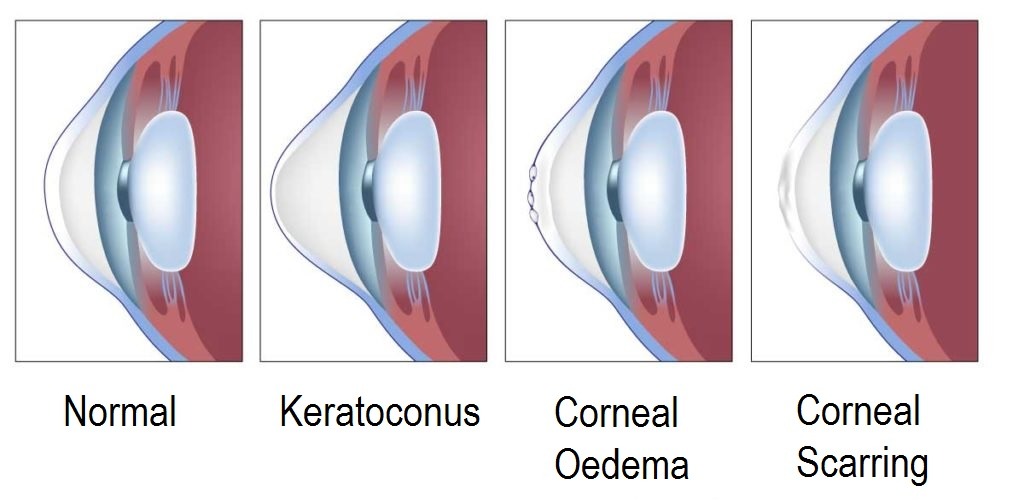
Full Medical BiographyKeratoconus is the degeneration of the cornea, usually affecting both eyes. Specifically, the cornea becomes thinner, leading to its deformation and shaping into a cone-like form.
Due to this deformation, astigmatism and myopia increase. Vision deteriorates, making the patient’s daily life more difficult. This condition typically begins during adolescence and progresses differently in each eye, as well as from patient to patient.
The initial treatment of the disease with glasses, and the frequent need to change and adjust them due to the worsening condition, has led in recent years to an innovative method for treating keratoconus: ultraviolet (UVA) radiation combined with riboflavin, also known as UV-collagen cross-linking (CXL).
Procedure
After removing the superficial layer of the cornea, drops of a vitamin B2 solution are applied for 30 minutes to thoroughly soak the corneal layer. Then the eye is irradiated with UVA, and finally, a therapeutic lens is placed.
A portion of these patients may need to undergo refractive surgery before this procedure to first correct myopia and/or astigmatism.
When applied correctly, this method reduces the need for corneal transplants by more than 50%.
The Scientific Director of the Glaucoma & Laser Eye Center, Prof. V. Kozompolis, was the first to use CXL to treat endothelial insufficiency and corneal ulcers, a treatment now internationally established.
He also demonstrated that CXL does not affect the eye’s drainage system or intraocular pressure.
Common Forms of Keratoconus
Related Videos
Read Also
 General Articles
47th National Ophthalmology Conference
Click on the link below to watch the statements of the Scientific Director of Glaucoma Laser Eye Center of Athens,