Presbyopia: What It Is – Symptoms & Painless Laser Treatment
Full Medical BiographyWhat Is Presbyopia?
Millions of people worldwide notice that, along with the first wrinkles, their near vision begins to deteriorate, especially when reading or focusing on close objects. The diagnosis in such cases is presbyopia, the most common age-related refractive condition affecting the eyes.
In presbyopia, the eye loses elasticity, making it difficult to focus on objects at close range. This typically occurs between the ages of 40–50, as the eyes naturally age.
Symptoms
As you enter your forties, you may notice difficulty seeing clearly at close distances, particularly when reading. Common symptoms of presbyopia include eye fatigue after reading, a burning sensation in the eyes after prolonged computer use, and a general sense that your near vision has weakened.
Why We Develop Presbyopia
Presbyopia is believed to result from hardening of the crystalline lens. It can be managed with reading glasses or multifocal contact lenses. Other options include multifocal intraocular lenses (IOLs) or intracorneal implants.
People with hyperopia (farsightedness) may develop presbyopia at an earlier age, while those with myopia (nearsightedness) may never need reading glasses.
Treatment with Glasses
You can purchase reading glasses at a pharmacy, but the lenses should be high-quality to avoid eye strain or worsening vision. Multifocal glasses and multifocal contact lenses are excellent solutions, particularly for younger patients. In older adults, however, dry eye can make contact lenses less practical.
Surgical Treatment
For many years, laser surgery has been used to correct presbyopia after a personalized assessment by an ophthalmologist.
Patients can now read without relying on glasses or contact lenses.
With latest-generation multifocal or monofocal intraocular lenses, the problem can be fully resolved, allowing patients to see clearly at all distances.
An equally effective alternative is monovision, which creates mild myopia in the non-dominant eye.
All procedures to remove and replace the crystalline lens can be performed with or without cataracts or other refractive errors.
These procedures are generally minimally invasive, safe, and free of complications. However, patients should be aware that a repeat procedure may be needed after several years.
For surgery to be considered successful, the patient should be able to see well at both near and far distances and not experience sensitivity to light contrast.
Cost of Presbyopia Surgery
Each case is different, and the cost may vary slightly. Presbyopia surgery is not covered by insurance, as it is considered a refractive procedure.
FAQ
Yes, age is a key factor in choosing the appropriate treatment method. There are significant differences between a 40-year-old farsighted or presbyopic patient and a 70-year-old patient.
For younger patients, hyperopic LASIK or PresbyLASIK is usually preferred, while for older patients, surgery with a multifocal intraocular lens is recommended.
People with myopia (nearsightedness) can read up close without glasses or contact lenses because myopia counteracts presbyopia.
- Ensure good lighting in your environment to avoid eye discomfort.
- Maintain the recommended distance from books, smartphones, and computers to give your eyes a rest.
- Keep your eyes hydrated with artificial tears.
- Support healthy vision by choosing foods rich in vitamins A and C.
Read Also
 General Articles
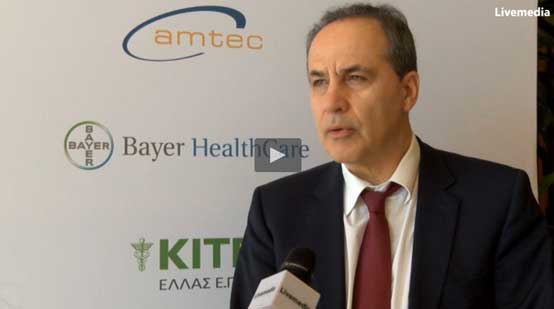
47th National Ophthalmology Conference
Click on the link below to watch the statements of the Scientific Director of Glaucoma Laser Eye Center of Athens,